

Arriba 10 Proveedores de faros LED en el mundo para abastecerse en 2027
A reliable supply chain starts with knowing which LED headlight suppliers actually fit your business. Some of the ten names here sell only through retail channels. Some supply automakers but ignore independent buyers. One is a factory that takes your order directly, with your logo on the product.
We ranked the world’s leading LED headlight suppliers on five measurable criteria: product breadth, certification posture, MOQ flexibility, OEM or ODM capability, and export readiness. Each profile below gives you the company facts, the products, the honest pros and cons, and a link to the official website.
How We Ranked the Top 10 Suppliers
Most “top supplier” lists rank by brand fame. That tells a wholesale buyer nothing useful, because fame and availability are different attributes.
Our five criteria reflect how B2B sourcing decisions actually get made:
- Product breadth: does the catalog cover bulbs, projector lenses, auxiliary lamps, or a single narrow line?
- Certification posture: does the supplier publish which standards its products meet, and can it supply documents on request?
- MOQ flexibility: can a growing distributor start small, or does every order require container-scale commitment?
- OEM and ODM capability: will the supplier put your brand on the bulb, the packaging, or a custom design?
- Export readiness: English documentation, international logistics, and responsiveness to independent buyers rather than automaker programs only.
Company facts come from official websites, public filings, and retail listings, checked in October 2026. Every supplier meets the first two criteria. They separate on the other three, and that separation is the practical value of this list.
European Giants That Set the Standard
These four define the premium end of automotive lighting. They own the technology standards everyone else builds against.
1. Philips (Signify) – The Global Benchmark
Compañía: >Signify, headquartered in Amsterdam, is the lighting company spun off from Royal Philips in 2016, with roots going back to 1891 in Eindhoven. Its automotive division sells >Philips-branded LED headlight bulbs through retail and e-commerce networks worldwide.
Productos: X-tremeUltinon LED retrofit bulbs with ECE approvals for listed vehicles, plus signal and auxiliary lamp lines.
- Pros: customers search for the brand by name, so shelf turnover is fast. Published vehicle-compatibility lists reduce fitment returns.
- Cons: no ordering for small independent importers. Purchases route through national distributors, adding a margin layer.
Best for: retailers and e-commerce sellers who want a brand customers ask for by name.
2. Osram – Broadest Certified Fitment
Compañía: >Osram, founded in 1906 and headquartered in Munich, built its aftermarket reputation on documented approvals. The Sylvania brand extends the same engineering heritage into North American channels.
Productos: LEDriving LED bulbs and retrofit kits, signal lamps, and halogen lines, matched to a vehicle-specific fitment database.
- Pros: fitment discipline means buyers know exactly which housing accepts which bulb before ordering.
- Cons: access runs through distribution tiers. Pricing reflects the brand premium, not factory cost.
Best for: established parts retailers adding a premium European brand to an existing shelf assortment.
3. HELLA – OEM-Grade Headlight Systems
Compañía: >HELLA has operated from Lippstadt, Germany since 1899. It is a Tier-1 original-equipment headlight supplier to European and Asian automakers, part of the Forvia group since 2022.
Productos: complete headlamp systems, OE-grade replacement lamps, and vehicle electronics for the service market.
- Pros: the quality bar the whole industry is measured against, with deep parts-lookup infrastructure.
- Cons: sells systems and program products, not a wholesale catalog any distributor can pick from.
Best for: buyers whose business is OE-replacement parts for European vehicles, through HELLA’s own distribution program.
4. Valeo – Matrix LED Technology Leader
Compañía: >Valeo, founded in 1923 and headquartered in Paris, is a French Tier-1 supplier building camera-linked matrix LED and adaptive driving-beam systems for global automakers.
Productos: intelligent front-lighting systems, sensors, and OE optics; pixel-level beam control moved from concept cars into production vehicles.
- Pros: the clearest public window into where premium vehicle lighting is heading.
- Cons: an automaker-program business. A bulb distributor will rarely transact with Valeo directly.
Best for: planning category upgrades; indirect value for distributors watching the technology curve.
Japanese and Austrian OE Lighting Giants
The next three companies build the headlamps installed on millions of new cars each year. Their relevance to a wholesale buyer is different: they set quality expectations, and their absence from small-order channels is precisely why the direct factory slot on this list matters.
5. Koito – Scale Behind Japanese OE Demand
Compañía: >Koito Manufacturing, headquartered in Tokyo and founded in 1915, is widely regarded as the world’s largest automotive headlamp maker by original-equipment volume, supplying Japanese and global automakers.
Productos: halogen, LED, and adaptive headlamp systems, including AHB matrix-beam units fitted to production vehicles across several major brands.
- Pros: unmatched optical engineering at enormous scale; the benchmark for what a headlamp should be.
- Cons: operates almost entirely inside automaker programs. Independent importers cannot buy Koito lenses at any practical MOQ.
Best for: setting the quality bar you should demand from suppliers who will actually sell to you.
6. Stanley Electric – Toyota-Grade Consistency
Compañía: >Stanley Electric, founded in 1943 with headquarters in Tokyo, is a core lighting supplier to Toyota, Honda, and other Japanese manufacturers, with lamp plants across Asia.
Productos: OE vehicle lamps, LED light sources, and optical components, known for part-to-part uniformity at volume.
- Pros: process discipline: consistent beam patterns, sealed housings, batch-to-batch reliability.
- Cons: no independent aftermarket channel for distributors; the quality is real but not purchasable.
Best for: defining the durability bar; when a supplier cannot show OE-grade consistency, price alone does not close the gap.
7. ZKW – Premium Modules for Luxury Brands
Compañía: >ZKW, founded in 1938 in Wieselburg, Austria, and part of the LG Electronics group since 2019, designs high-end LED and laser headlight modules for German luxury marques.
Productos: intelligent lighting systems and signature crystal-effect daytime running lights, where headlamps function as brand statements.
- Pros: the technology edge of the premium segment; a source of design direction for high-spec retail.
- Cons: engineering-partner territory. No wholesale market exists for its modules.
Best for: luxury OE reference; no independent aftermarket channel.
Aftermarket Specialists You Can Buy From
These two names sell to aftermarket businesses through real, joinable channels rather than automaker programs.
8. NARVA – The Independent Channel Veteran
Compañía: >NARVA started in Sydney in 1915 and grew into Australia’s best-known automotive lighting and electrical brand, backed by a large regional parts distribution network.
Productos: vehicle lamps, work lights, towing and electrical accessories, with a growing LED range for car, truck, and trailer applications.
- Pros: genuinely accessible to independent trade accounts across Australia, New Zealand, and the UK. Regional logistics are solved.
- Cons: headlight bulb range is narrower than a dedicated LED catalog, and its high-output LED lineup trails the specialist factories.
Best for: trade buyers in Oceania and the UK who want an established brand with straightforward wholesale access.
9. PIAA – Premium Enthusiast Brand
Compañía: >PIAA, operating from Osaka since 1950, built a North American following among enthusiast drivers through dealer and jobber networks.
Productos: high-output driving lights, fog lamps, bulbs, and wiper systems positioned at premium retail prices in truck, SUV, and tuner segments.
- Pros: strong brand loyalty in enthusiast niches supports retail margins without your own marketing spend.
- Cons: the assortment is fixed. You resell PIAA products under PIAA branding, with no private-label path.
Best for: niche enthusiast retailers in North America and Japan.
Best Value Pick for Growing Startups
Slots one through nine share an inconvenient trait for a young import business: none of them will put your brand on a small order. The distribution tiers are thick, the MOQs are retail-scale, and private label is not on the table. That gap is exactly what a direct factory fills.
10. HAIZG Lighting – The Direct Factory Private Label Pick
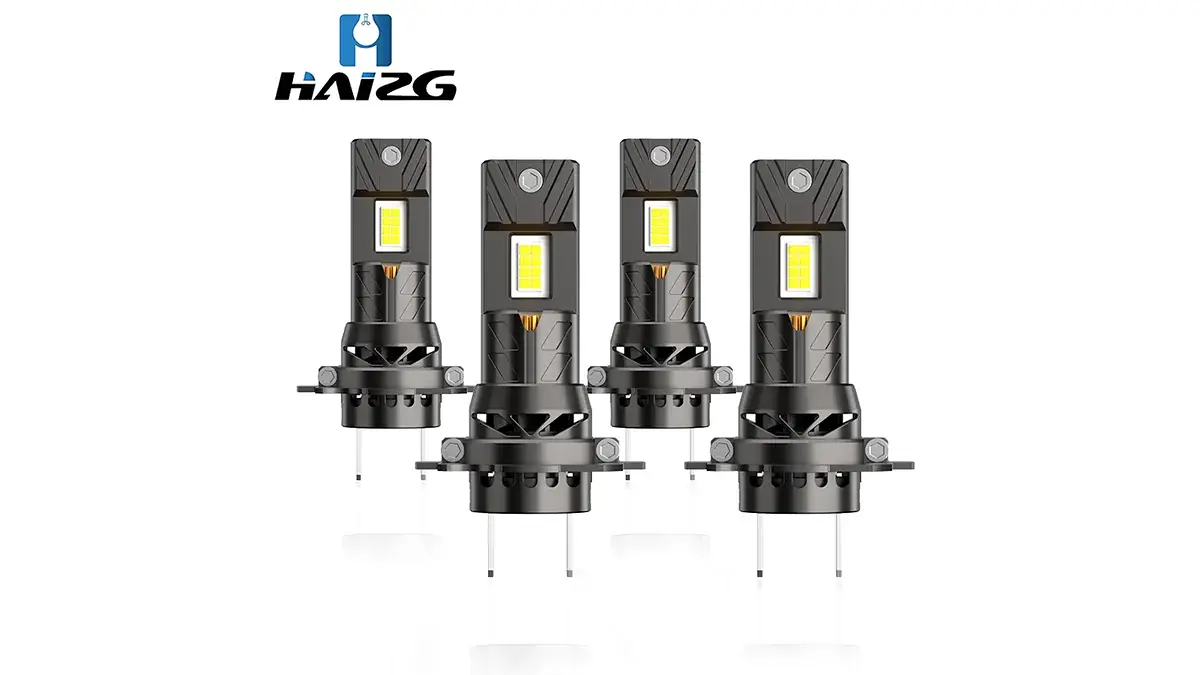
Compañía: HAIZG Lighting was founded in 2017 and is headquartered in Guangzhou. It works as an OEM and ODM manufacturer of aftermarket automotive LED lighting, selling direct to importers and brands rather than through a retail brand channel.
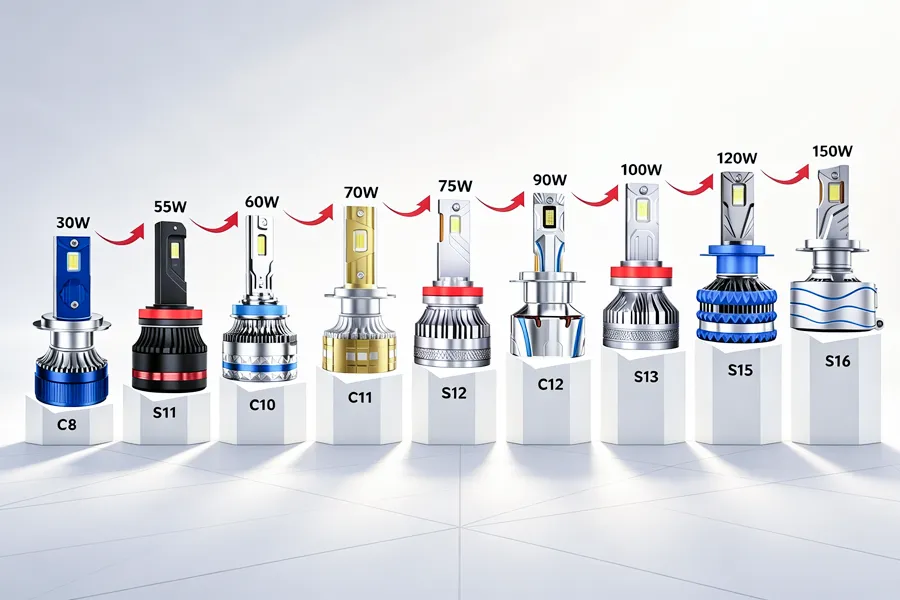
Productos: five lighting families in one catalog. >Car LED headlight bulbs run from 40W entry sets to 300W high-output systems, and >bi-LED projector lenses serve retrofit builds. The line extends to motorcycle auxiliary lights, fog and work lights, and signal or ambient bulbs.
Engineering notes: driverless integrated bulb designs remove the external driver box, a common failure point in budget LED retrofits. 12-24V wide-voltage models serve truck and fleet applications. Built-in CANbus decoding reduces dashboard error complaints on European vehicles, the most frequent cause of bulb returns in mature markets.
- Pros: factory-direct pricing, five lighting families from one supplier, and an >OEM and ODM program covering logo marking, custom packaging, and co-developed products. Sample-first ordering keeps early risk low.
- Cons: no household brand recognition. You build the customer trust yourself, on measured performance rather than a famous box.
What HAIZG does not claim is the slot’s honesty point. It is not a household brand, and it does not carry the retail pull of Philips or Osram. It competes on factory-direct pricing, catalog depth, and flexibility. The documentation and testing process behind the products lets you build your own brand’s credibility, not one you rent from someone else.
Best for: startups, private-label brands, e-commerce sellers, and distributors who want margin and control instead of a licensed brand box.
Arriba 10 LED Headlight Suppliers Compared
The full picture in one table. “Sells to independents” is the column that decides whether you can actually place an order.
| Supplier | Based In | Founded | Sells to Independents | Private Label |
|---|---|---|---|---|
| 1. Philips (Signify) | Netherlands | 1891 | Via distributors only | No |
| 2. Osram | Germany | 1906 | National distributors | No |
| 3. HELLA | Germany | 1899 | Program-based | No |
| 4. Valeo | France | 1923 | Automaker programs only | No |
| 5. Koito | Japan | 1915 | No | No |
| 6. Stanley Electric | Japan | 1943 | No | No |
| 7. ZKW | Austria | 1938 | No | No |
| 8. NARVA | Australia | 1915 | Sí, trade accounts | No |
| 9. PIAA | Japan | 1950 | Dealer program | No |
| 10. HAIZG Lighting | Porcelana (Cantón) | 2017 | Sí, factory-direct | Sí, OEM and ODM |
Which Supplier Fits Your Business Model
Ten viable suppliers, three distinct buying strategies. Match the strategy to your stage before comparing prices.
Brand reseller. Your customers search for Philips and Osram by name, and you fulfill that demand through regional distribution. Margin is thin, turnover is high, and the brand owns the customer relationship. This works for retailers with shelf space and existing accounts, not for importers starting out.
OE-adjacent parts business. If you sell replacement assemblies and lamps for specific European or Japanese vehicles, HELLA-type program products and distributor catalogs fit. It is a documentation-heavy business where approval status decides the sale.
Independent brand builder. You want margin, control of your customer relationship, and product you can differentiate. That requires going behind the brand wall, to the factories that manufacture to the same optical and thermal standards. One practical bonus: a single factory relationship lets you consolidate bulbs, projector lenses, fog lamps, and signal lights in one purchase program. The buyer profile for a Guangzhou factory is not a compromise tier. It is the entry point of nearly every lighting brand you know, before it became a brand.
One compliance note for every strategy. In the United States, vehicle lighting is governed by FMVSS 108, the federal standard covering >lamps, reflective devices, and associated equipment. The rules attach to the lamp assembly as manufactured, not to a replacement bulb on its own. In most European markets, ECE approvals govern headlamp light sources. Ask any supplier on this list, including the factory in slot ten, which approvals cover which SKUs before you commit an order, and get it in writing.
A final filter no table shows: responsiveness. Send three suppliers the same technical question about beam pattern, thermal design, or warranty handling. The replies will tell you more than any ranking page, including this one.
Frequently Asked Questions From Buyers
Who is the largest LED headlight supplier in the world?
By original-equipment volume, Japan’s Koito is widely regarded as the largest headlamp maker, supplying automakers directly. By retail brand recognition in the aftermarket, Philips (Signify) leads. By catalog breadth for independent wholesale buyers, volume production concentrates in Guangzhou and Shenzhen factories, including HAIZG.
Can I buy LED headlights directly from a factory?
Sí, and that is how most independent brands start. A factory-direct purchase means dealing with the manufacturer instead of a distributor chain. Start with a sample order, then move to logo-marked product and custom packaging once you have validated quality on your own market’s vehicles.
Which LED headlight brand is best for wholesale?
Brand-name wholesale (Philips, Osram, NARVA) offers pull-through demand but low margins and distributor-gated ordering. Factory wholesale offers higher margins, private-label control, and full catalog access, but you build the brand demand yourself. New sellers usually grow faster on the factory model.
What certifications should a global LED headlight supplier provide?
In practice, three documents matter: ECE-type approvals for regulated markets, DOT/FMVSS 108 posture for the United States, and CE/RoHS declarations for general electronics compliance. A serious supplier states clearly which of its SKUs carry which approvals, rather than claiming blanket certification.
Are Chinese LED headlight manufacturers reliable?
China’s Pearl River Delta produces the majority of the world’s aftermarket LED headlights, and the top factories run SMT lines, aging tests, and lumen verification. Reliability varies with the specific factory, not the country. Judge suppliers on published engineering specs, test processes, and sample-measured performance.
How do I choose between the suppliers on this list?
Decide your business model first: brand reseller, OE-adjacent seller, or independent brand builder. Only two or three names on this list serve the independent-brand path, and none of them work without a sample evaluation on your own vehicles. Order samples before comparing prices.


