LED Headlight Suppliers: How to Verify a Real Factory, Not a Trader
Buying from LED headlight suppliers looks easy until the second container. The quote is sharp, the samples look right, and then a batch lands with a different driver board, a different connector, and nobody who can answer a thermal question. That pattern usually means you did not buy from a factory. You bought from someone with a website.
This guide covers how to choose LED headlight suppliers who own the production line. Five checks, each with a document to request, a signal that passes, and a signal that should stop the deal. You can finish all five in one week on a sample budget.
One definition before the checks. A trading company is a registered seller whose license lists no production scope. It buys from plants and resells. A factory owns the line, the test rigs, and the batch records. Neither is automatically wrong for you, and our ranking of the top 10 LED headlight suppliers explains where each type fits.
Why Trader or Factory Status Changes Your Margin
Pay what you think is a factory price and receive middleman service anyway. That is the failure worth avoiding.
A reseller adds a margin on the same bulb, and that spread is not theft. It pays for someone answering email in your timezone, mixing a small order across five categories, and handling export paperwork.
Three failures show up in month two or three, not on the first order:
- The spec drifts. A reseller buys from whichever line had stock. Your second batch has a different driver, a different fan height, or a different color bin, and retail customers notice before you do.
- Quality control has no address. When the failure rate spikes, the reseller asks for photos and waits for an answer from someone else. A plant pulls the batch record and reads the date code.
- Custom work stalls. A private label box, a changed plug, or a new housing means drawings travel between you and a factory that holds no contract with you.
Some resellers are excellent. They disclose what they are, name the plant, and quote a service margin openly. Write that plant name on your scorecard and audit it the way you would audit a direct supplier. The disqualifier is not the middle. It is the refusal to say who the middle is standing in front of.
Check 1 Verify the Business License Scope
Every argument about how to choose LED headlight suppliers starts with a document.
Ask for a scan of the business license before you discuss price. Every Chinese company holds one, and a file a real factory sends takes ten seconds to find on a desktop. A license that has to be requested from an accountant and arrives two days later is already an answer.
- Business scope. Look for the characters for manufacture or production. A scope listing only sales describes a seller, and headlight hardware also needs an electronics or lighting fixture scope to match what it claims to build.
- Registered address. A unit in an industrial park is normal for a Guangzhou lighting plant. An office in a commercial district can still belong to a manufacturer with the plant elsewhere, so treat the address as a question. Ask where production happens and match that address to the one printed on the certificates.
- Unified Social Credit Code. This 18-digit code is the company’s only stable identifier. Company names translate inconsistently between documents; the code does not. Write it down and put it on every later paper.
Then check the code against the National Enterprise Credit Information Publicity System, the public registry run by the market regulator. Expect friction. The site blocks automated access and shows a challenge page to most visitors outside China. So ask your contact to open the record live on a video call and read it while you watch.
Put no weight on registered capital. Since the 2014 company registration reform, that figure is subscribed rather than paid in, so a business can state a large number and never move it. A modest capital with a manufacturing scope and three years of history beats a big number with no scope behind it.
Check 2 Insist on a Live Video Tour
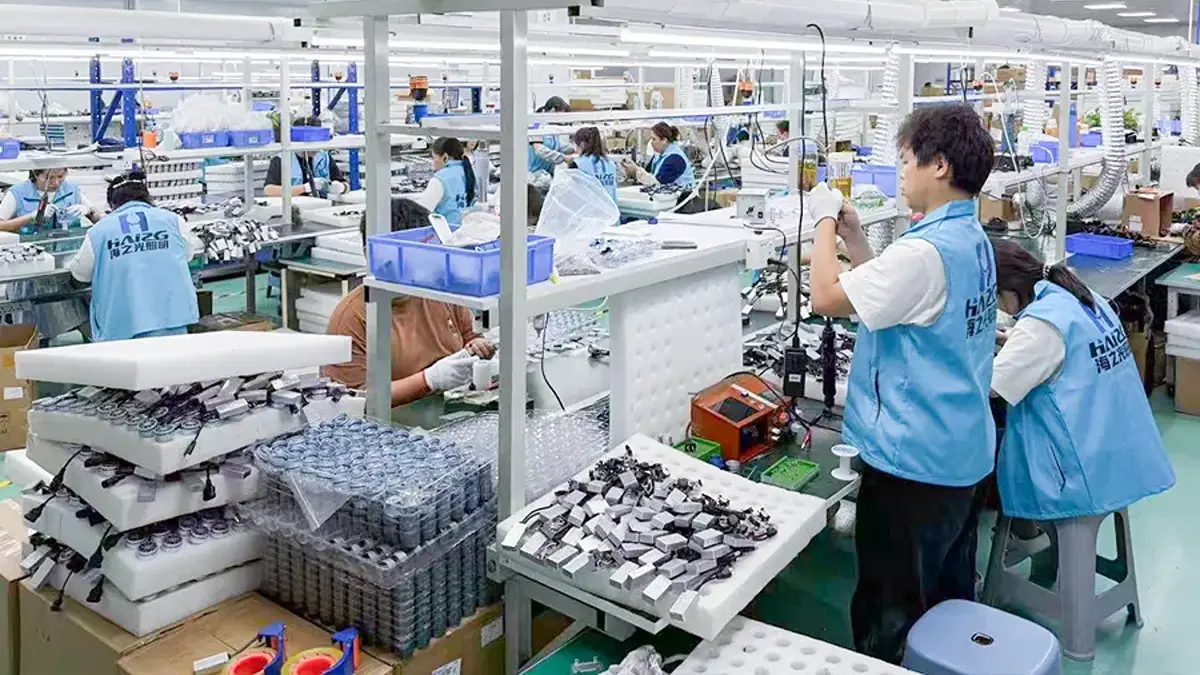
The fastest of the five ways to learn how to choose LED headlight suppliers is also the one most buyers skip.
Ask for a call this week, unscheduled, not a tour arranged for next month. You are not testing the plant. You are testing whether someone can walk to the line in ten minutes holding a phone.
Direct the call yourself, and do not accept a walk through a showroom:
- Start at board assembly. A headlight driver is a populated circuit board, so ask to see the placement machines and the reflow oven. If nobody can show you where the board is built, the board comes from outside.
- Move to chip attachment. Look for soldering of the LED to the board and for thermal interface material being applied. That joint is where most field failures begin.
- Ask for photometry. A working plant keeps an integrating sphere for flux and color measurement, plus a rig for beam shape.
- Ask for the aging racks. Units should be burning at full load on high-voltage constant-current supply before packing.
- Ask for the temperature chamber. Cycling between about minus 40 and plus 105 degrees Celsius is how a supplier proves the driver survives a bonnet in August.
- Finish at packing and have them pick your sample off the shelf and read its date code to camera.
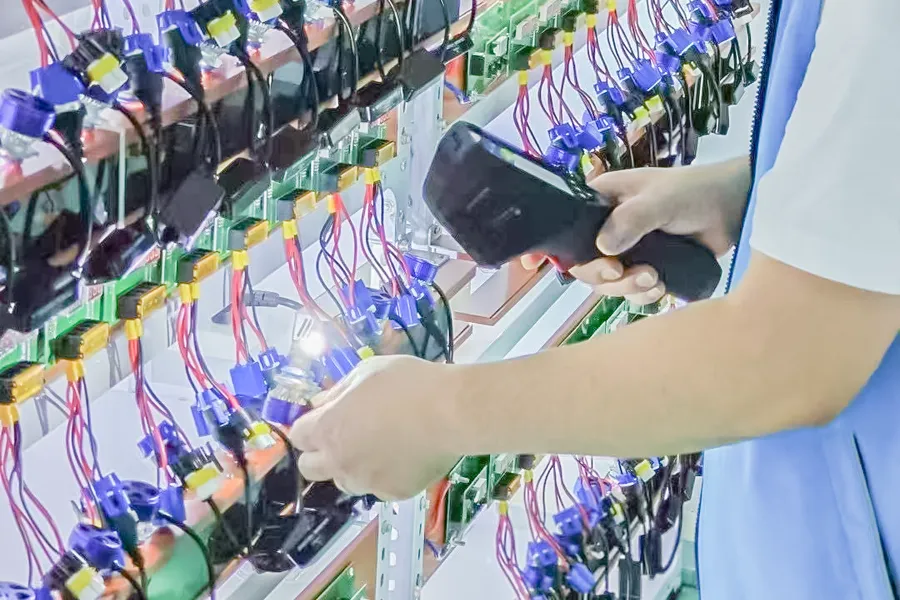
HAIZG runs a 5,000 square meter plant in Guangzhou with eight production lines, in-house board assembly, CNC machining, two integrating spheres, temperature chambers and full-load aging racks. Every unit passes a five-step inspection and carries a batch date code that traces back to a shift record. Assume that is the bar, because it is what a factory can show without notice.
Reseller tells on the call are consistent. The camera never leaves a display wall. Nobody can locate your SKU. And the visit needs three days of notice plus a manager’s approval.
Check 3 Validate Certificates at the Issuer
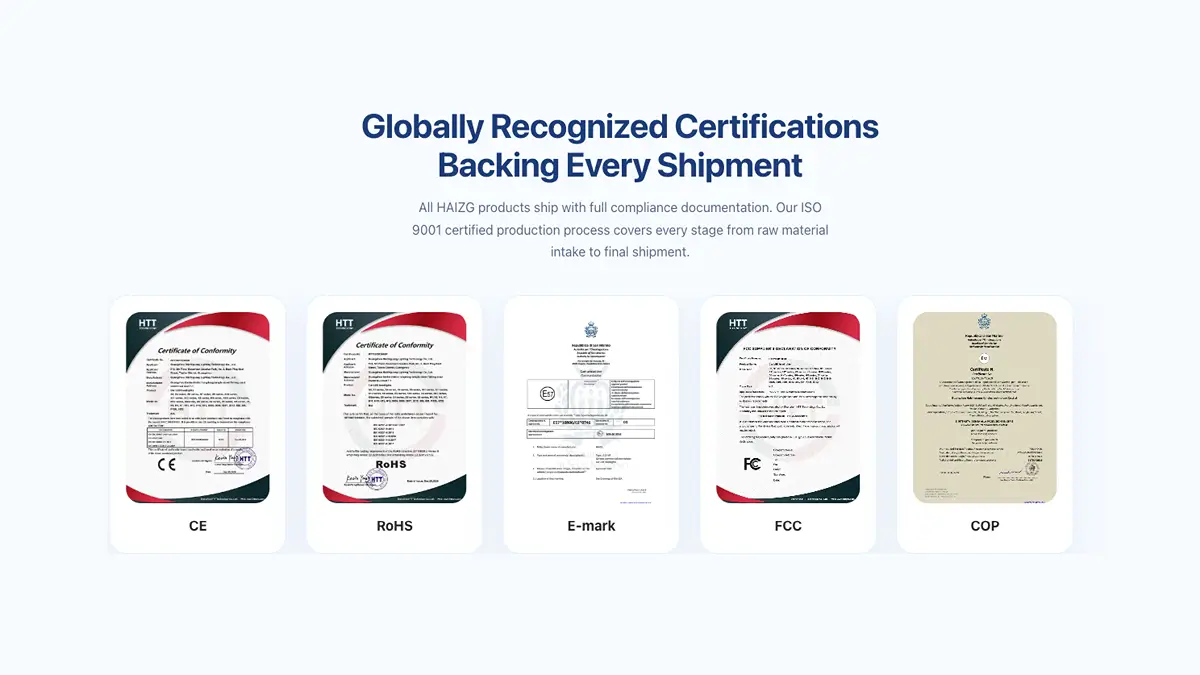
Half of how to choose LED headlight suppliers is knowing where a claim can be checked independently.
A certificate PDF proves that someone made a PDF. Verification means checking the number where the number actually lives.
What the E-mark should say
European approval is a circle or capital E, a country number, then the regulation and the approval number. Ask for the communication document the authority issued, not the logo on a product page. Then read the regulation number. Front lighting moved. Headlamp approvals run under UN Regulation No. 149, which absorbed the older front-lighting rules, and signalling devices sit under No. 148. Both took effect in November 2019, and from November 2021 the legacy regulations stopped accepting new type approvals.
An approval granted under the old rules does not become void, and a 2019 certificate still covers the type it was issued for. What it cannot do is cover a model that came later, so ask which approval number covers the SKU in front of you. Then ask a second question: does the approval cover the complete headlamp or the light source module? Bulbs sold as direct swaps for halogen fitments often carry an ECE logo with no number behind it. No number means nothing to verify.
What the DOT marking really means
For the US market, the lighting standard is public text. Read 49 CFR 571.108 and the marking rules in section S6.5. The lens of each original and replacement headlamp, and of each beam contributor, must carry the DOT symbol as a certification under 49 U.S.C. 30115, plus the name or trademark of the manufacturer or importer, plus the voltage and part number.
Two conclusions follow. There is no government pre-approval, because the manufacturer certifies its own product, so a listing that says DOT approved is a claim rather than a test result. And for lamps other than headlamps the DOT mark is optional, which is why a printed sticker on a small bulb proves very little. Ask for a macro photo of the moulded marking and for the report behind it.
How to check the quality system
ISO 9001 is a generic quality management certificate. IATF 16949 is the automotive scheme built on top of it. A supplier holding IATF has passed a stricter audit, with the traceability and defect-rate demands car makers impose. Most bulb sellers hold neither. Verify any ISO certificate at IAF CertSearch, the free database that certification bodies upload to. Absence from that database is a question to ask rather than proof of a fake, since not every body uploads every certificate.
Check 4 Test Samples Against a Sheet
Sampling is where how to choose LED headlight suppliers stops being theory.
Order the same socket from three vendors at the same claimed wattage, and pay full sample price plus courier. Free samples get hand-picked units. You want what the line produces on an ordinary Tuesday, whether you are testing car LED headlight bulbs for a retail launch or a projector lens for a retrofit programme.
Write the sheet before the parcels arrive and fill it in blind, so nobody at a supplier sees which column is theirs:
- Power drawn at 13.5 volts, measured with a meter in the line, against the claimed wattage.
- Luminous flux from the sphere report, plus the chromaticity coordinates behind the color temperature claim.
- Driver temperature after 30 minutes fitted inside a housing, not loose on a desk.
- Low beam pattern on a wall at 10 meters, marking where the cut line sits and how much light spills above it.
- Vehicle compatibility on a donor car from your target market, logging the failures rather than only the pass.
- A 48-hour continuous burn on every sample, recording the hour each unit died.
Early failures matter more than peak numbers. A bulb that quits in hour nine is the bulb your customer returns in week three. Keep the dead units, because they are the evidence you carry into a warranty conversation.
Ask each vendor for the datasheet that matches your sample and read what a complete one contains. A factory gives chromaticity coordinates, color rendering indices, luminous efficacy, the chip supplier, the number of thermal tubes, and a CAN bus decode rate. A reseller gives a marketing page with a lumen figure and a wattage. The second document is not a specification, and you cannot build a receiving standard on it.
Check 5 Watch How They Answer Technical Questions

Send five questions by email before the first invoice, and grade the answers rather than the promises:
- What is the junction temperature at the chip after 30 minutes, and how was it measured?
- How does the driver behave at 24 volts, and which models are rated for truck electrical systems?
- Does the CAN bus solution use a resistor, a decoder, or a redesigned driver, and what does that do to heat?
- Who owns the tooling if we change a housing, and what is the lead time for that change?
- What was the failure rate on this model over the last twelve months, and what is the claim process?
A factory answers with a number and often a chart, because the measuring equipment sits down the hall. A reseller forwards the questions and returns two days later with a paragraph containing no figure. Both replies are useful to you. Only one of them is evidence.
Watch three smaller signals. Do the answers hold when a different salesperson replies? Does the supplier put claims in writing on letterhead, or only in a chat window? When you push on a number, does the person defend it with a test method or quietly drop it? A vendor who abandons a claim under light pressure will abandon your warranty claim later.
Speed matters less than specificity. A reply in six hours that says yes to everything is worse than one in two days that says we cannot hold that wattage. The second answer carries a thermal reason.
Build a Supplier Scorecard Before You Commit
This sheet turns how to choose LED headlight suppliers into a routine rather than a judgement call.
Score every vendor from zero to two on six lines. Two points means the evidence arrived without being chased. One means it arrived after a request. Zero means it never arrived.
| Check | Ask for | Pass signal | Fail signal |
|---|---|---|---|
| License scope | Scan plus credit code | Manufacture listed, address matches certificates | Sales-only scope, no code given |
| Live tour | Unscheduled call this week | Walks to the line in minutes | Needs three days notice |
| Certificates | Issued approval documents | Number verifies at the issuer | Logo with no approval number |
| Sample tests | Datasheet for your batch | Chromaticity and efficacy data | Lumen claim only |
| Technical answers | Five written questions | Numbers plus test method | Generic agreement |
| Traceability | Batch code on the unit | Code maps to a shift record | No marking at all |
Below nine points, do not place a sample order, because you would be buying a lesson. From nine to eleven, run a pilot order on one model and hold a second source. At twelve, still dual-source, since a single plant is a single point of failure inside your own supply chain.
Then send the scorecard to the vendor before you buy anything. This flips the usual direction of the conversation. A factory with nothing to hide reads it as a competent buyer and answers line by line. A reseller who cannot name the plant stops replying, and you get your answer without spending on samples or courier.
Frequently Asked Questions From Buyers
How do you know if a headlight supplier is a real factory?
Show me the line on an unannounced call. A factory walks to its placement machines, reflow oven, integrating sphere and aging racks within minutes, and names its own equipment. Ask for that tour this week plus a business license scan. If the scope lists only sales, or the visit needs three days of notice, you are talking to a reseller.
How do you verify a Chinese supplier’s business license?
Ask for the license scan, copy its 18-digit Unified Social Credit Code, and read the business scope for the words meaning manufacture or production. Then check that code on the national enterprise registry. The registry blocks automated access for most visitors outside China, so have your contact open the record live on a video call while you watch.
How do I check if an ECE certificate is genuine?
Read the approval number and the regulation number from the document the authority issued, then verify with that authority. Front lighting approvals run under UN Regulation No. 149 and signalling under No. 148. A listing showing an ECE logo with no number has nothing to check, so treat the logo as decoration until a document arrives.
Should I visit the factory before placing an order?
Travel before a tooling or exclusivity commitment, not before a first sample order. A three-day trip costs more than the samples it inspects. Use the live video tour for the opening pass, and save the flight for the vendor that already cleared five checks and is about to hold your custom moulds.
Is it safe to pay a Chinese supplier by T/T?
T/T with a deposit and the balance before shipment is normal practice, and the safety sits in the details. Pay the company account named on the license, never a personal account. Keep the proforma invoice specific about model, wattage, packaging and Incoterms, because it is the only document that protects you in a dispute.
What are common scams with LED headlight suppliers?
Most of them are slow rather than dramatic. A lumen figure measured at peak with no thermal soak. A copied certificate PDF. Samples picked by hand from a good batch. Or a seller who disappears after payment, because the account was personal. Every one of these fails a documented check in this guide.